Publication manifest signing v0.1
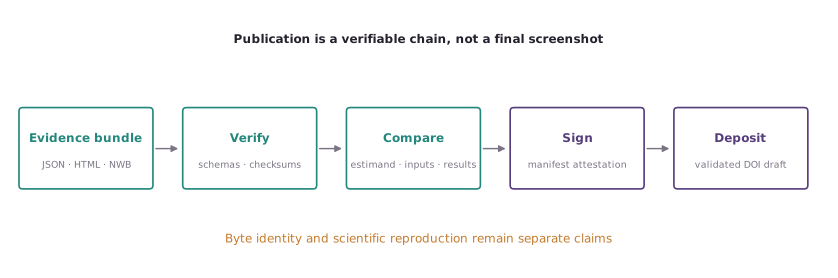
FiberPhotometry authenticates a completed evidence bundle with a detached OpenSSH
signature. The signed payload is a canonical JSON attestation binding the exact
manifest.json SHA-256, project fingerprint, signer identity, signing time,
signature method, and a fixed application namespace.
Why an attestation
The manifest already binds every analysis, report, and NWB artifact by checksum. Signing its digest authenticates that complete evidence root without modifying the manifest after signing. The detached signature and attestation remain external to the manifest and can be copied alongside the bundle.
Only bundles with a verified manifest and complete status may be signed. Signing
refuses to replace existing files unless the caller explicitly requests overwrite.
OpenSSH trust model
The namespace is fixed to
fiberphotometry-publication@aeronjl.github.io, preventing a signature made for a
different application from being accepted here. Verification supplies the signed
identity to ssh-keygen -Y verify and requires a matching key in an independently
maintained allowed_signers file. Restricting each entry with a namespaces=
option is strongly recommended.
OpenSSH documents that -Y sign accepts a private key or a public key backed by
ssh-agent, that namespaces provide domain separation, and that -Y verify
requires an identity and allowed-signers file and reports success through exit
status zero: OpenSSH ssh-keygen(1).
Verification sequence
verify_publication_manifest:
- verifies every ordinary artifact against
manifest.json; - strictly parses attestation schema v1;
- recalculates and compares the manifest and project fingerprints;
- verifies the detached SSHSIG under the fixed namespace;
- requires the signed identity to be authorized by
allowed_signers.
The verifier returns a PublicationVerification only after all five checks pass.
Trust files and private keys must not be stored inside the publication bundle.